AdGuard Browser Extension MV3
Chrome has removed all remaining Manifest V2 (MV2) extensions from the Chrome Web Store, and other Chromium-based browsers, Opera and Microsoft Edge among them, are moving to MV3 as well. Users of these browsers need an MV3 extension, compatible with the new API Manifest V3. Our thoughts on this topic are extensively discussed on our blog.
Nossa extensão MV3 bloqueia anúncios e rastreadores de forma eficaz, além de gerenciar perfeitamente widgets sociais, banners e anúncios em vídeo. A maioria dos usuários não notará nenhuma diferença operacional, mas há algumas limitações e mudanças que você precisa conhecer.
Onde encontrar nossas extensões
The MV3 version is our primary Chrome extension and is available in the
Chrome Web Store. MV3 builds are also published on GitHub Releases as chrome-mv3.zip for Chrome and opera-mv3.zip for Opera.
The MV3 beta is available in the Chrome Web Store.
AdGuard Ad Blocker MV2 was removed from the Chrome Web Store together with all other MV2 extensions. MV2 keeps working in Firefox and in Chromium-based browsers that retained support for it — see How to keep using AdGuard after Chrome removed MV2.
Principais alterações nos recursos e configurações
-
Filter updates. The options Auto-update filters and Check filters update are not available in the Filters tab: rules that ship as part of the extension can be updated only together with a new extension version, after store review. Keep automatic extension updates enabled in your browser.
Custom filters you add by URL update on their own, independently of extension updates.
-
AdGuard Quick Fixes filter. Because built-in rules can’t be updated on request, the extension ships the AdGuard Quick Fixes filter. It uses dynamic rules to react to newly introduced ads and broken websites between releases, so keep it enabled.
-
Filtering log
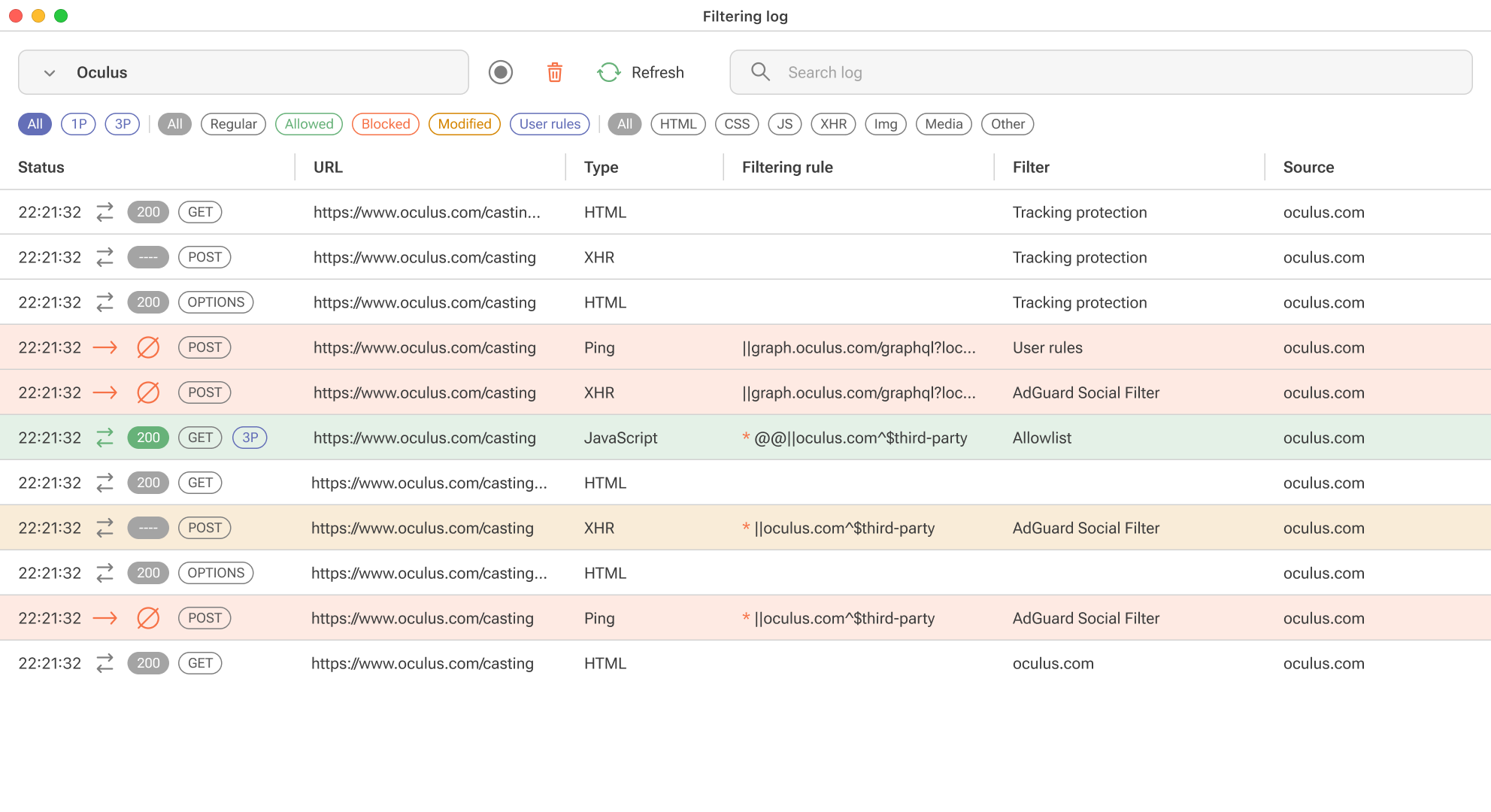
Due to DNR restrictions, we can’t show exactly which rule worked, but we will provide an “assumed rule that was triggered” based on our engine. For precise information, you’ll need to install the “unpacked” form of the extension in your browser yourself. You’ll find detailed instructions on how to do this in a separate article.
-
Tracking protection (formerly known as Stealth mode)
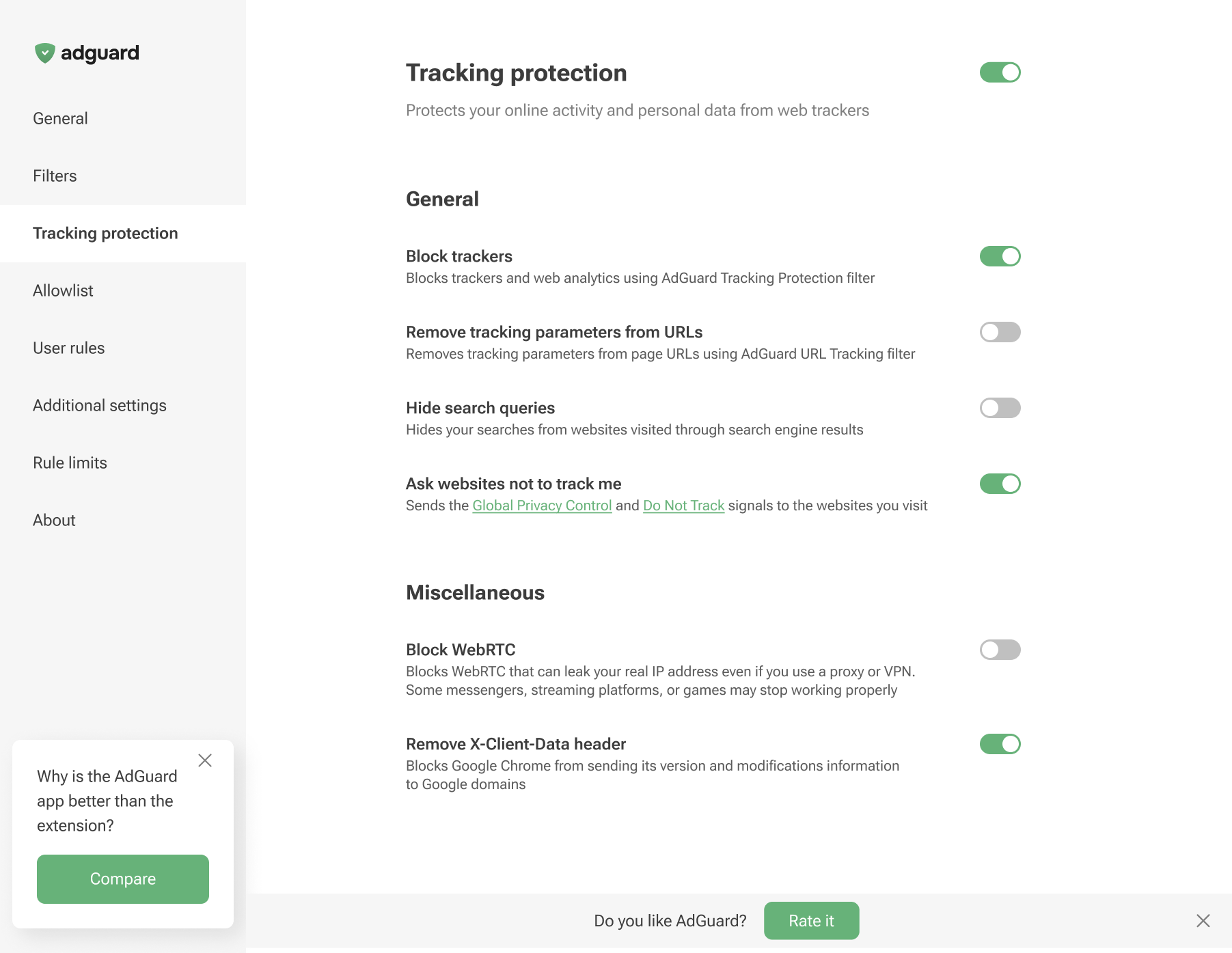
There are no Cookies section, along with Self-destruction of first-party cookies and Self-destruction of third-party cookies since we cannot set the TTL of cookies using declarative rules.
-
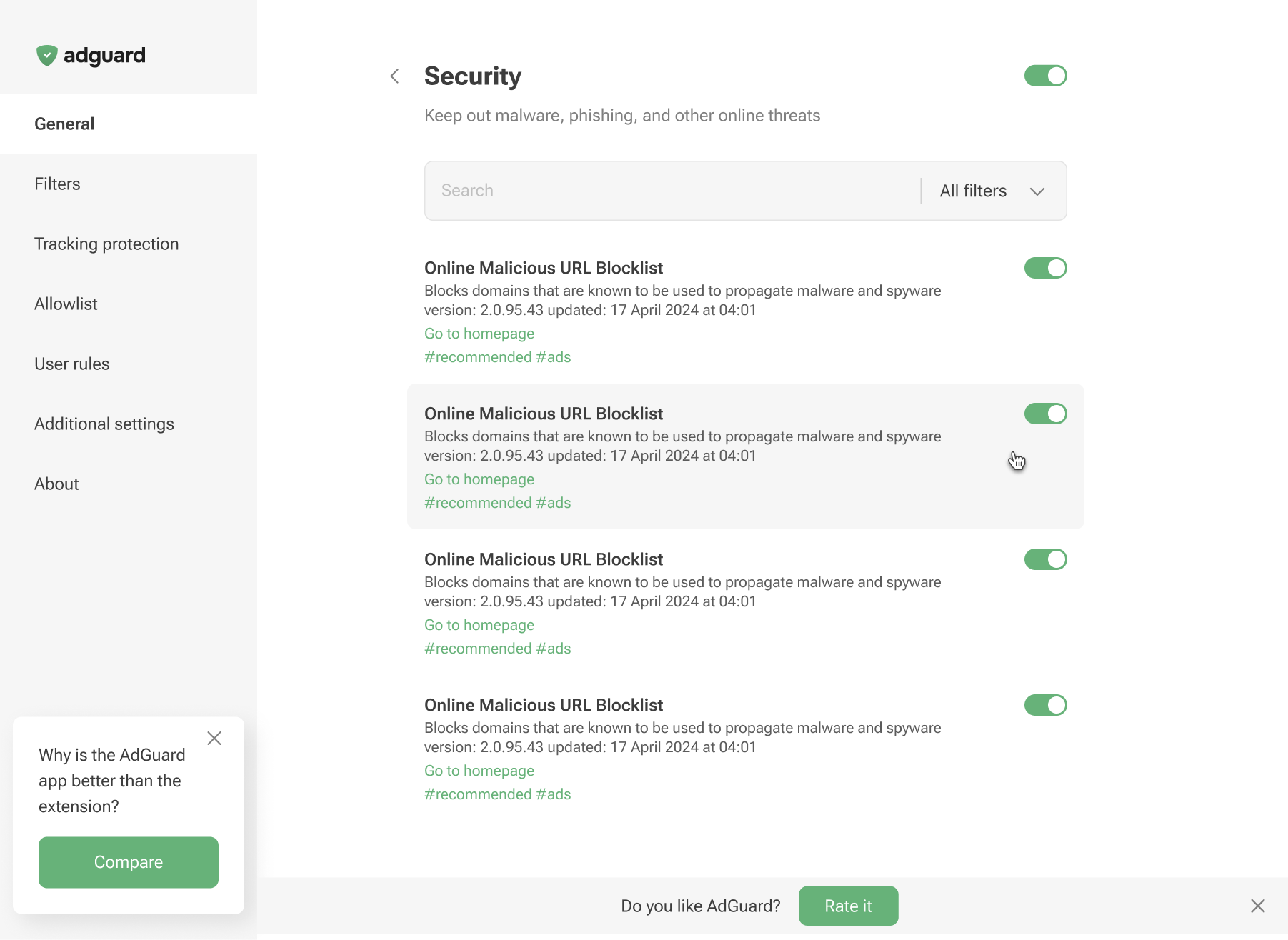
Phishing & malware protection is no longer available in the general settings. To protect yourself from malicious websites and scams, enable the appropriate Security filters in the Filters tab.
Limitações
Número máximo de regras e filtros
O Manifest V3 impõe limites em regras estáticas e regex por extensão. Os usuários podem receber notificações quando esses limites forem excedidos.
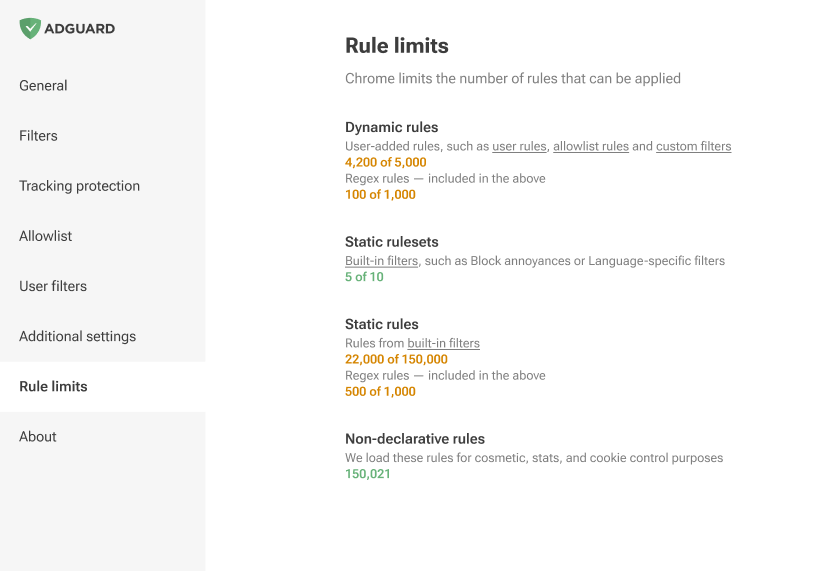
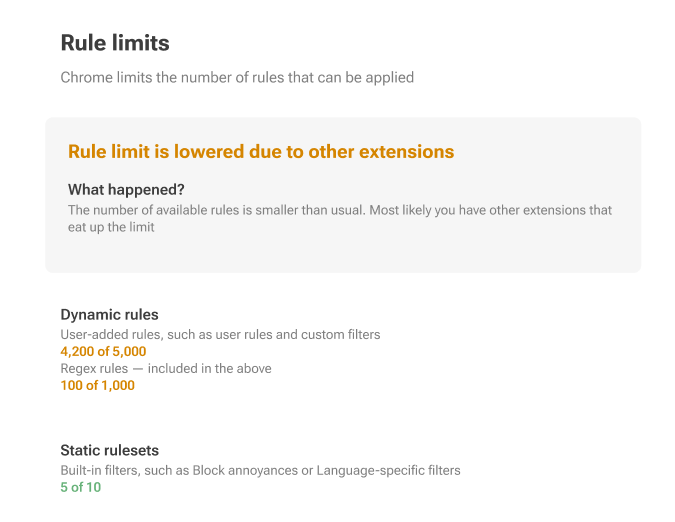
Basicamente, o Manifest V3 divide as regras em estáticas (integradas) e dinâmicas, com limites rígidos.
Regras estáticas: mínimo de 30.000 regras por extensão, com um limite cumulativo de 330.000 para todas as extensões instaladas por um único usuário.
Para regras regex, o limite é definido como 1.000 por extensão.
O número máximo de filtros ativados simultaneamente é 50.
Regras dinâmicas: é imposto um limite estrito de 5.000 regras, que inclui um máximo de 1.000 regras regex.
Se esse limite for excedido, apenas 5.000 regras convertidas serão aplicadas na seguinte ordem: primeiro a lista de permissões, depois as Regras de usuário, filtros personalizados e, finalmente, o filtro Quick Fixes.
Regras convertidas são regras que foram transformadas para o [formato DNR] usando o conversor declarativo. Durante esse processo de conversão, algumas regras podem substituir outras (
$badfilter), algumas podem ser combinadas ($removeparam), resultando em uma lista de regras com uma ordem ligeiramente diferente.Dessa lista de regras convertidas, usaremos apenas 5.000 regras. Os demais serão exibidos no editor, mas não serão aplicados.
Here’s how a rule with a basic modifier is converted to a declarative rule:
||example.org^$script,third-party,domain=example.com
é convertido para
[
    {
        "id": 1,
        "action": {
            "type": "block"
        },
        "condition": {
            "urlFilter": "||example.org^",
            "domainType": "thirdParty",
            "initiatorDomains": [
                "example.com"
            ],
            "resourceTypes": [
                "script"
            ]
        },
        "priority": 302
    }
]
Mais exemplos podem ser encontrados no GitHub.
Modificadores de regras de rede
Os modificadores de regras de rede têm limitações: alguns deles não podem ser implementados no MV3 ou só podem ser implementados com restrições.
Mais detalhes sobre as limitações podem ser encontrados no GitHub. Para obter mais informações sobre modificadores, consulte nossa Base de conhecimento.