AdGuard Browser Extension MV3
Chrome has removed all remaining Manifest V2 (MV2) extensions from the Chrome Web Store, and other Chromium-based browsers, Opera and Microsoft Edge among them, are moving to MV3 as well. Users of these browsers need an MV3 extension, compatible with the new API Manifest V3. Our thoughts on this topic are extensively discussed on our blog.
La nostra estensione MV3 blocca in modo efficace gli annunci e i tracker, gestendo al tempo stesso widget sociali, banner e annunci video. La maggior parte degli utenti non noterà alcuna differenza operativa, ma ci sono alcune limitazioni e modifiche di cui essere a conoscenza.
Dove trovare le nostre estensioni
The MV3 version is our primary Chrome extension and is available in the
Chrome Web Store. MV3 builds are also published on GitHub Releases as chrome-mv3.zip for Chrome and opera-mv3.zip for Opera.
The MV3 beta is available in the Chrome Web Store.
AdGuard Ad Blocker MV2 was removed from the Chrome Web Store together with all other MV2 extensions. MV2 keeps working in Firefox and in Chromium-based browsers that retained support for it — see How to keep using AdGuard after Chrome removed MV2.
Principali modifiche alle funzionalità e alle impostazioni
-
Filter updates. The options Auto-update filters and Check filters update are not available in the Filters tab: rules that ship as part of the extension can be updated only together with a new extension version, after store review. Keep automatic extension updates enabled in your browser.
Custom filters you add by URL update on their own, independently of extension updates.
-
AdGuard Quick Fixes filter. Because built-in rules can’t be updated on request, the extension ships the AdGuard Quick Fixes filter. It uses dynamic rules to react to newly introduced ads and broken websites between releases, so keep it enabled.
-
Filtering log
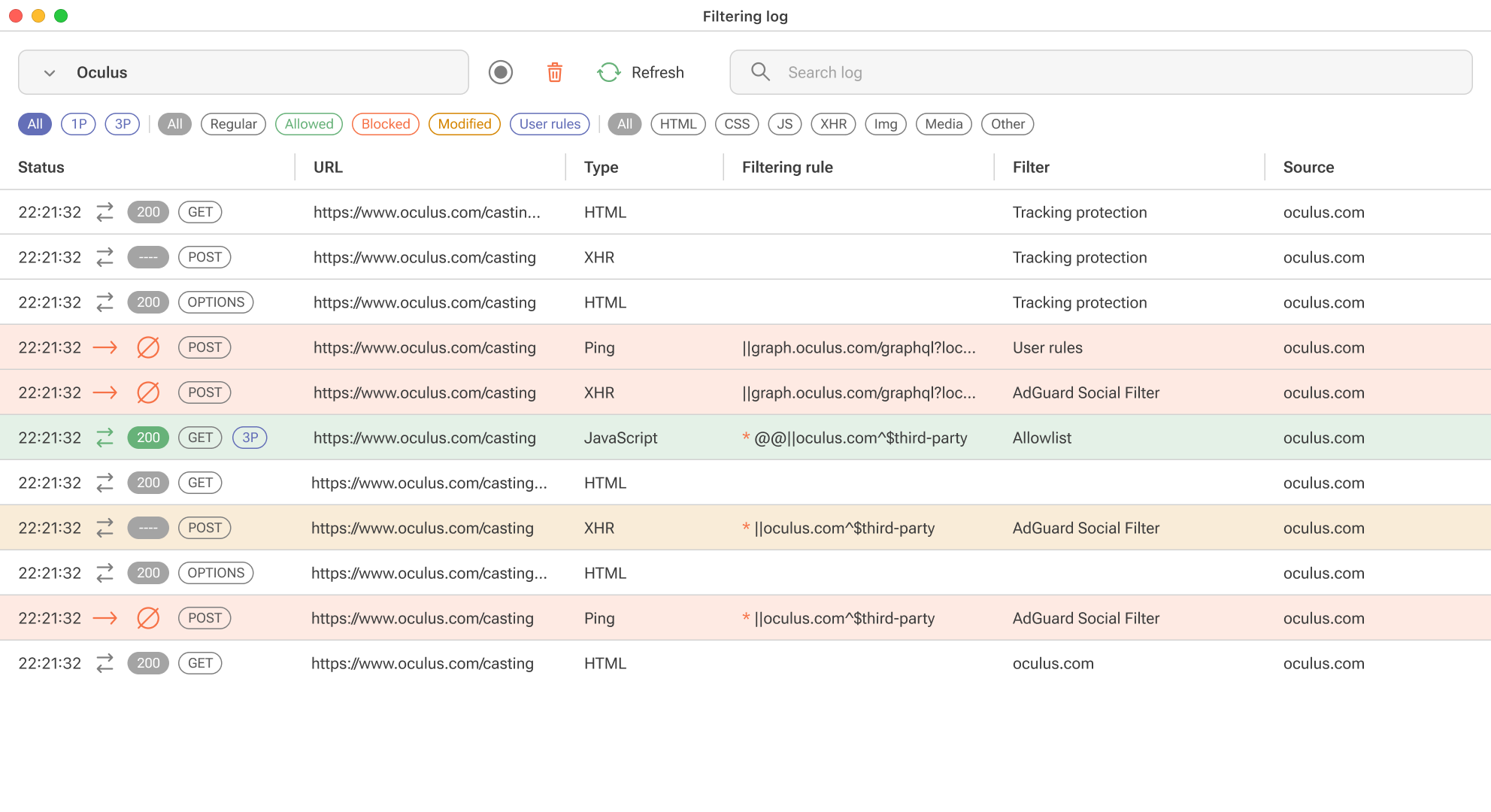
Due to DNR restrictions, we can’t show exactly which rule worked, but we will provide an “assumed rule that was triggered” based on our engine. For precise information, you’ll need to install the “unpacked” form of the extension in your browser yourself. You’ll find detailed instructions on how to do this in a separate article.
-
Tracking protection (formerly known as Stealth mode)
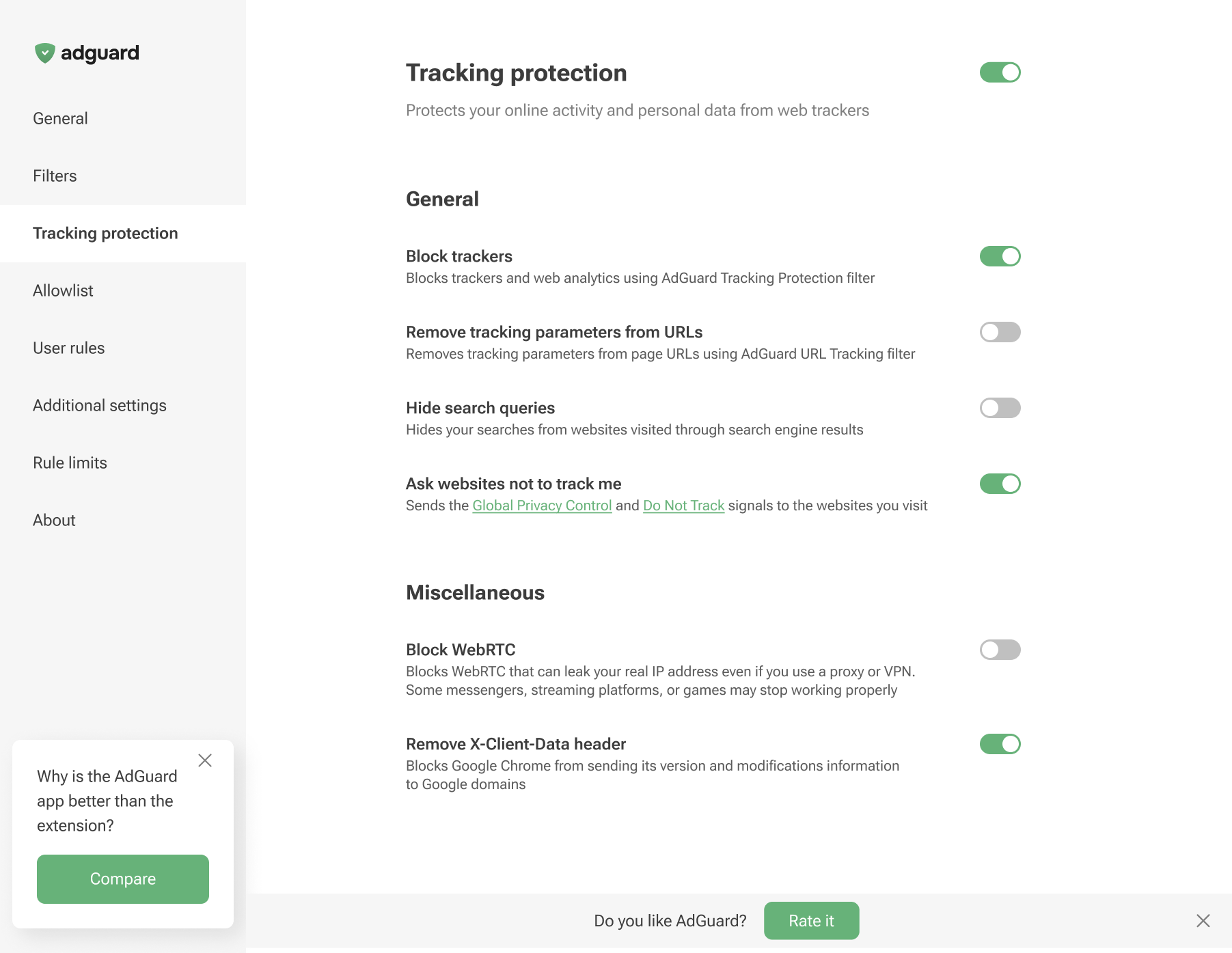
There are no Cookies section, along with Self-destruction of first-party cookies and Self-destruction of third-party cookies since we cannot set the TTL of cookies using declarative rules.
-
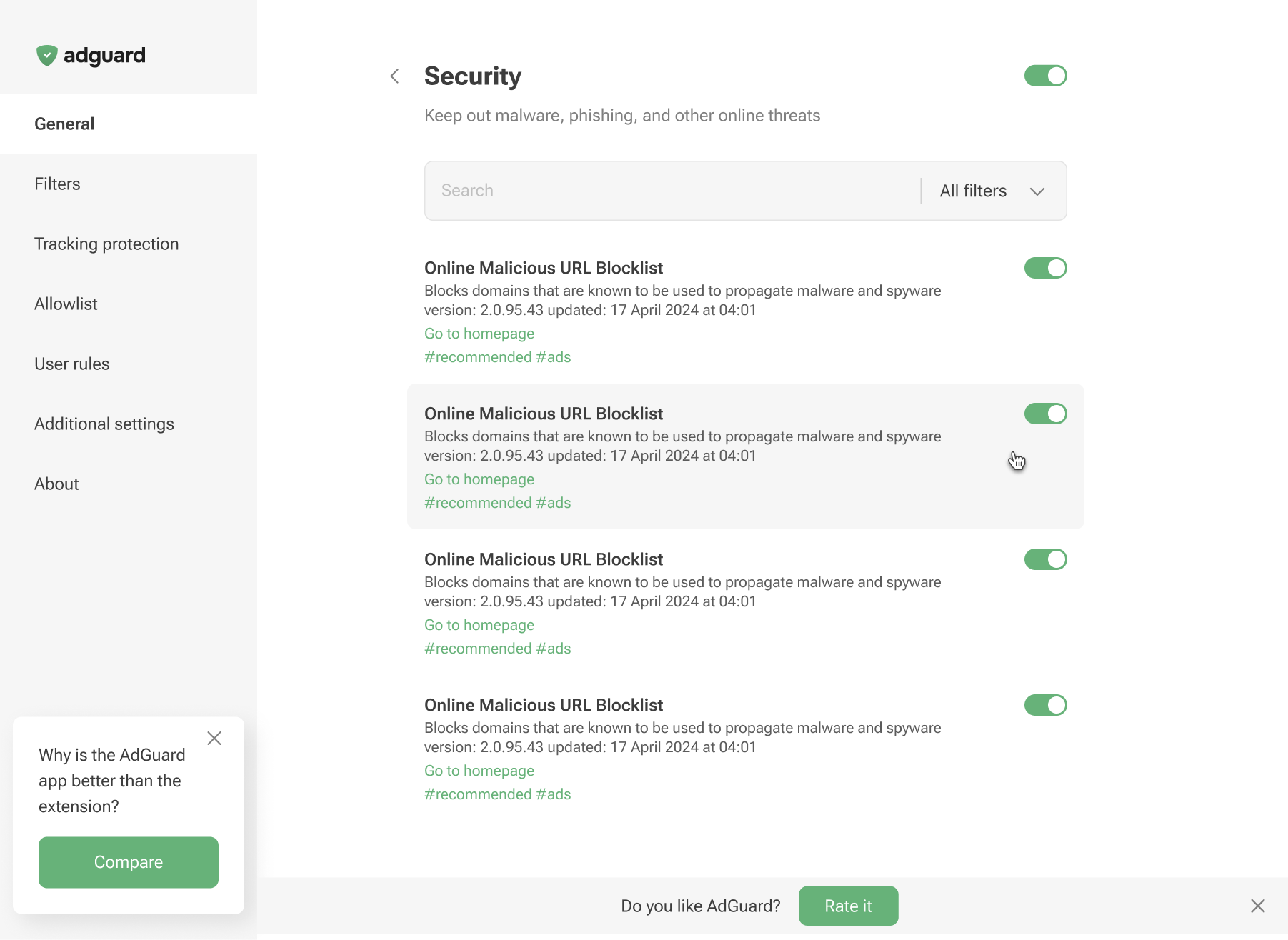
Phishing & malware protection is no longer available in the general settings. To protect yourself from malicious websites and scams, enable the appropriate Security filters in the Filters tab.
Limitazioni
Quantità massimale di regole e filtri
Manifest V3 impone limiti alle regole statiche e regex per estensione. Gli utenti potrebbero ricevere notifiche quando questi limiti vengono superati.
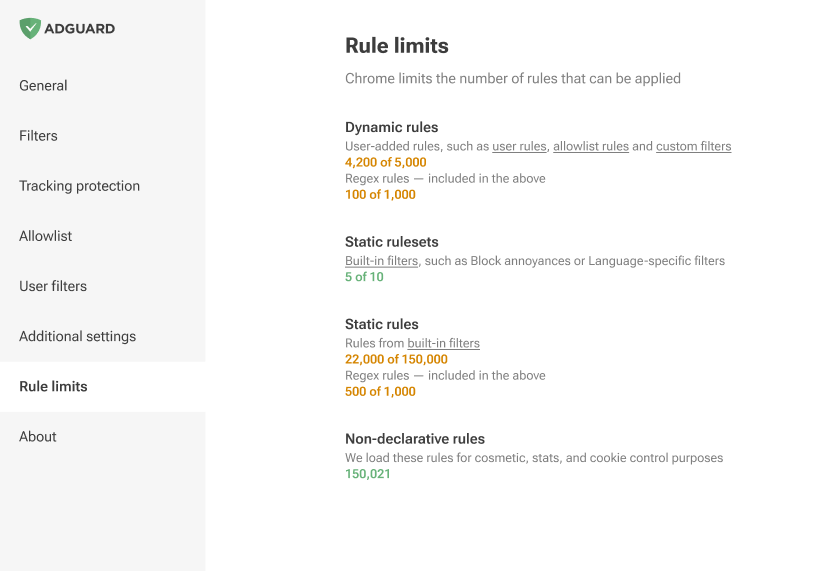
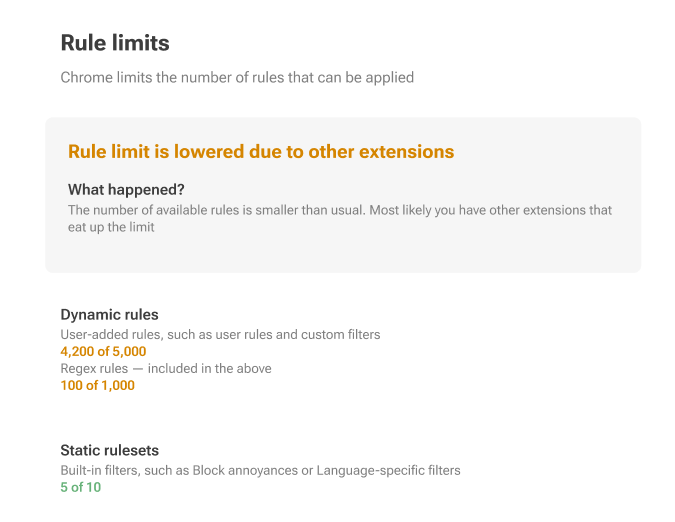
Fondamentalmente, Manifest V3 divide le regole in statiche (integrate) e dinamiche, con limiti rigorosi.
Regole statiche: minimo 30.000 regole per estensione, con un limite cumulativo di 330.000 per tutte le estensioni installate da un singolo utente.
Per le regole regex, il limite è impostato a 1.000 per estensione.
Il numero massimo di filtri abilitati contemporaneamente è 50.
Regole dinamiche: è imposto un limite massimo di 5.000 regole, che include un massimo di 1.000 regole regex.
Se questo limite viene superato, verranno applicate solo 5.000 regole convertite nel seguente ordine: prima la lista consensi, poi le regole utente e infine i filtri personali.
Le regole convertite sono regole che sono state trasformate in [formato DNR] utilizzando il convertitore dichiarativo. Durante questo processo di conversione, alcune regole potrebbero sovrascriverne altre (
$badfilter), alcune potrebbero essere combinate ($removeparam), producendo un elenco di regole con un ordine leggermente diverso.Da questo elenco di regole convertite, ne utilizzeremo solo 5.000. Gli altri verranno visualizzati nell'editor, ma non applicati.
Here’s how a rule with a basic modifier is converted to a declarative rule:
||example.org^$script,third-party,domain=example.com
viene convertita in
[
    {
        "id": 1,
        "action": {
            "type": "block"
        },
        "condition": {
            "urlFilter": "||example.org^",
            "domainType": "thirdParty",
            "initiatorDomains": [
                "example.com"
            ],
            "resourceTypes": [
                "script"
            ]
        },
        "priority": 302
    }
]
Altri esempi possono essere trovati su GitHub.
Modificatori delle regole di rete
I modificatori delle regole di rete presentano delle limitazioni: alcuni di essi non possono essere implementati in MV3 oppure possono essere implementati solo con delle restrizioni.
Ulteriori dettagli sulle limitazioni sono disponibili su GitHub. Per ulteriori informazioni sui modificatori, fare riferimento alla nostra Knowledge base.